
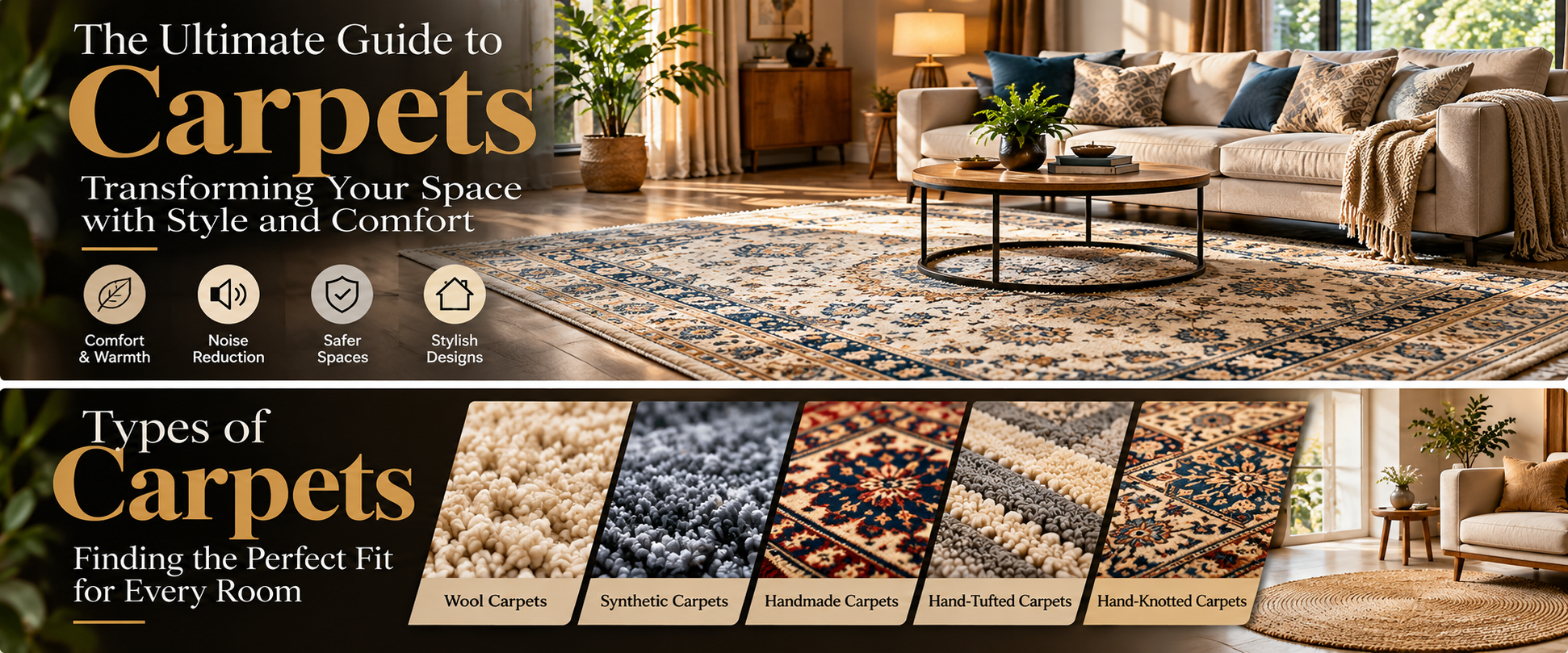
The Ultimate Guide to Carpets: Transforming Your Space with Style and Comfort
A room can look completely different with the right carpet. It can soften an otherwise plain floor, bring together furniture and décor, and introduce a sense of warmth that is difficult to achieve with hard flooring alone. Whether you are furnishing a new home, refreshing an existing interior, or creating a professional environment, a thoughtfully chosen carpet can make the space feel more complete.
Carpets are available in many forms, from traditional wool designs and natural jute rugs to contemporary synthetic styles, handmade pieces, hand-tufted creations, hand-knotted carpets, and machine-produced options. Each type has its own characteristics, making it important to understand what you are buying before making a decision.
The ideal carpet is not simply the one that looks attractive in a photograph. It should also suit the room, withstand the expected amount of use, fit the available space, and match your maintenance preferences.
This guide explores the key things to know before choosing a carpet, including its benefits, materials, construction methods, sizing, placement, cleaning, and role in interior design.
What Makes Carpets a Popular Flooring Choice?
Carpets have remained popular because they combine practical functionality with decorative appeal. They can change the atmosphere of a room without requiring major alterations to walls, furniture, or other permanent features.
A More Comfortable Surface
Walking across a soft carpet feels very different from walking over stone, tile, or other hard surfaces. Depending on the material and pile, a carpet can provide a pleasant cushioned feeling underfoot.
This can be especially useful in spaces where people spend considerable time relaxing, such as bedrooms, lounges, family rooms, and reading corners.
A dense, soft rug can also make a room feel more inviting. In a bedroom, for example, placing a rug beside the bed creates a warmer surface to step onto in the morning.
Adding Warmth to Interiors
Flooring has a noticeable effect on how a room feels. Hard surfaces can sometimes create a cooler visual and physical impression, whereas carpets introduce softness and warmth.
The effect is not limited to temperature. Rich textures, warm colors, and layered textiles can make an interior feel more comfortable and lived-in.
For this reason, carpets are frequently used in bedrooms, living rooms, hospitality areas, and other spaces where a cozy atmosphere is desirable.
Helping Manage Everyday Sound
A room containing several hard surfaces can allow footsteps and other everyday sounds to travel and echo. Carpet fibers can absorb part of this sound, helping create a softer acoustic environment.
This can be useful in residential and professional settings alike. Offices, meeting rooms, bedrooms, libraries, apartments, and hotel interiors can all benefit from the quieter character that carpeted surfaces may provide.
Supporting Safer Movement
A carpet provides a softer surface than many rigid flooring materials. When properly positioned and secured, a rug can also provide additional grip underfoot.
This can be useful in homes with children or in rooms where people frequently move between different areas. A suitable non-slip rug pad can further improve stability where appropriate.
An Easy Way to Introduce Personality
One of the biggest advantages of decorative carpets is the range of designs available.
A simple ivory rug can keep a room understated. A geometric carpet can give a contemporary interior more definition. A traditional floral design can introduce classic character, while an abstract pattern can create an artistic focal point.
Because carpets are available in many colors, shapes, and sizes, they can be used to complement almost any interior concept.
Carpet or Hardwood: Understanding the Difference
Carpet and hardwood create very different experiences, so the better option depends on the room and the preferences of the people using it.
Hardwood is often selected for its natural appearance, clean lines, and timeless character. It can be particularly attractive in spaces where an open and structured appearance is desired.
Carpet takes a different approach. It introduces softness, texture, warmth, and visual layering. It can also help soften sound and create a more relaxed atmosphere.
For a bedroom or comfortable family room, carpet may be particularly appealing. In areas where water and frequent spills are expected, however, another flooring solution may be more suitable.
Instead of asking which material is universally better, consider how the space will actually be used.
Understanding the Main Types of Carpets
The material and manufacturing method have a major influence on how a carpet looks, feels, performs, and should be maintained.
Wool Carpets
Wool is a natural fiber that has been used for carpets for generations. It is valued for its softness, resilience, warmth, and refined appearance.
A well-made wool carpet can add a sophisticated touch to a living room, bedroom, library, premium office, or hospitality environment.
Wool also has a naturally distinctive surface. Rather than appearing completely uniform, quality wool can have subtle variations that contribute to its character.
For buyers who appreciate natural materials and a traditional sense of luxury, wool remains an attractive choice.
Synthetic Carpets
Synthetic carpets are produced using manufactured fibers, including nylon, polyester, and polypropylene.
They are widely available in different price ranges and designs. Depending on the particular product, they can provide useful combinations of durability, softness, color variety, and affordability.
However, synthetic carpets are not all identical. Fiber quality, construction, density, backing, and intended use should all be considered before purchasing.
Nylon
Nylon is commonly associated with resilience and regular-use performance. It can be considered for hallways, busy household areas, offices, and other locations where the floor receives frequent foot traffic.
Polyester
Polyester is often selected for its soft feel, attractive color possibilities, and relatively accessible pricing.
It can work well in areas where decorative appearance and comfort are priorities.
The most suitable synthetic carpet depends on the specific product rather than the fiber name alone.
Handmade Carpets
Handmade carpets offer something beyond basic floor coverage: individuality.
Depending on their construction and design, handmade pieces can contain detailed motifs, distinctive textures, artistic elements, and subtle variations created during production.
They can work particularly well in interiors where the carpet is intended to be a noticeable decorative feature.
A handmade carpet may be appropriate for someone looking for a distinctive design rather than a completely uniform mass-produced appearance.
Hand-Tufted Carpets
Hand-tufting allows yarn to be inserted into a prepared foundation to create the desired design and surface.
This technique can accommodate detailed patterns, multiple textures, and different pile heights. As a result, hand-tufted carpets are frequently found in contemporary interiors as well as more decorative spaces.
Their combination of visual detail and comfortable texture makes them a versatile option for many rooms.
Hand-Knotted Carpets
Hand-knotting is a traditional method in which individual knots form the structure of the carpet.
Because the process involves detailed craftsmanship, hand-knotted carpets are often associated with premium collections. Their designs may range from classic floral motifs to sophisticated contemporary compositions.
For buyers who value traditional carpet-making techniques and detailed craftsmanship, a hand-knotted carpet can be a meaningful addition to an interior.
Power-Loomed Carpets
Power-loomed carpets are produced using mechanical equipment, allowing designs and dimensions to be reproduced consistently.
They can be useful for customers who want consistent patterns, practical performance, or larger quantities without choosing a fully handmade product.
As with any carpet, construction quality and intended use should be considered before purchasing.
How to Choose a Carpet That Fits Your Lifestyle
A carpet should suit the people and activities in the room. A beautiful design will not be a successful choice if it cannot handle the conditions in which it is being used.
Think About Foot Traffic
Start by considering how often the room is used.
A hallway or frequently used family room generally requires more attention to durability than a guest bedroom.
High-traffic areas can benefit from materials and constructions designed for regular use, while quieter rooms allow greater freedom to prioritize softness and decorative appearance.
Select a Suitable Color
Color can influence the entire mood of a room.
Cream, ivory, beige, and soft grey can help create a light and calm appearance. Brown, charcoal, deep green, or navy can provide greater visual depth.
Muted gold and champagne tones can work particularly well in sophisticated interiors when used carefully.
Remember that the carpet should work with the room’s existing elements. Consider wall paint, furniture, curtains, flooring, artwork, and lighting before choosing the final shade.
Choose a Pattern Carefully
A carpet pattern should complement the overall design rather than fight against it.
If your furniture is simple and understated, a detailed rug can provide an interesting focal point. If the room already contains patterned furniture or bold artwork, a simpler carpet may create better balance.
Geometric patterns generally suit contemporary interiors, while floral and ornamental motifs can create a more traditional impression. Abstract designs can add an artistic and modern quality.
Understand Pile Height
Pile describes the structure and height of the carpet fibers.
Cut pile has fibers that are cut at the ends and is commonly associated with a softer surface. Loop pile retains loops of fiber and can produce a more structured appearance.
Some carpets combine different pile techniques to create patterns or variations in texture.
When comparing carpets, consider not only how the pile looks but also how it will feel and perform in the intended room.
Getting the Carpet Size Right
A beautiful carpet can still look wrong if the proportions are unsuitable for the room.
Before ordering, measure the floor area and consider the furniture arrangement.
Living Room
A larger rug can help visually connect a sofa, chairs, and coffee table. Depending on the layout, the front legs of furniture may sit on the rug to create a unified arrangement.
Bedroom
A rug can be positioned underneath the bed or placed beside it. The goal is to create a comfortable transition between the bed and the surrounding floor.
Dining Room
The rug should be large enough to accommodate the table and allow dining chairs to remain on the rug when they are pulled away from the table.
Hallway
Long, narrow runners can work well in corridors and entryways. Choose a size that leaves an appropriate amount of visible flooring along the sides.
Measuring first can prevent one of the most common carpet-buying mistakes: selecting a design you love in a size that does not work in your room.
Carpet Installation and Placement
The installation method depends on the type of carpet.
Wall-to-wall carpeting generally requires careful measurement and proper floor preparation. The surface should be clean and suitable for installation, and uneven areas should be addressed beforehand.
Professional installation can be particularly helpful when seams, stretching, edges, or large areas are involved.
Area rugs are easier to position because they do not normally require permanent installation. However, a suitable rug pad can improve stability and provide additional cushioning.
Before placing a rug, consider doors, furniture movement, walkways, and the condition of the floor beneath it.
How to Keep Carpets Looking Good
Even an expensive carpet needs regular care. Simple maintenance habits can make a significant difference.
Vacuum Consistently
Dust and loose dirt can settle between carpet fibers. Regular vacuuming helps remove these particles before they accumulate.
Areas that receive heavy foot traffic may need attention more frequently than rooms that are rarely used.
Deal With Spills Quickly
A fresh spill is generally easier to deal with than an old stain.
Instead of vigorously rubbing the area, gently blot the liquid using an appropriate clean material and follow the care instructions for the carpet.
Do not assume that the same cleaning solution is suitable for every fiber. Always check the manufacturer’s recommendations first.
Give Specialty Carpets Extra Attention
Handmade, hand-knotted, wool, and other specialty carpets can have specific care requirements.
Aggressive cleaning methods or unsuitable chemicals may damage certain materials. If you are unsure, consult the carpet manufacturer, seller, or a qualified cleaning professional.
Reduce Wear in Busy Areas
Entrance mats can help capture dirt before it reaches the carpet. Furniture pads can also help reduce concentrated pressure beneath heavy pieces.
For movable decorative rugs, changing their orientation periodically can help distribute wear more evenly.
Using Carpets to Improve Interior Design
A carpet can act as a visual foundation for a room.
Instead of selecting the rug after every other design decision has been made, consider using it as one of the elements that establishes the room’s color and texture.
For example, an ivory and warm beige carpet can support a soft neutral interior. A charcoal and muted gold design can create a more dramatic luxury aesthetic. Deep green combined with neutral furnishings can add richness without making the room feel overwhelming.
The important principle is balance. The carpet should connect with the surrounding décor through color, pattern, texture, or style.
Carpet Ideas for Different Interiors
Modern Living Rooms
Choose geometric, abstract, or restrained patterned carpets for a contemporary living room. Neutral furniture can be paired with a stronger rug design to create a focal point.
Comfortable Bedrooms
Soft textures and calming colors can help create a relaxing bedroom environment. Positioning a rug around the bed can also make the space feel more finished.
Professional Offices
For offices and meeting rooms, understated patterns and practical materials can create a polished appearance without distracting from the workspace.
Luxury Hotels
Hospitality interiors often use carpets to establish a recognizable visual identity. Rich patterns, carefully selected colors, and premium textures can help create a memorable guest environment.
Children’s Spaces
Children’s rooms benefit from comfortable and practical surfaces. Playful shapes and cheerful patterns can add personality, while easy-care materials may simplify everyday maintenance.
Natural Carpet Options
Natural materials can add a different type of character to an interior.
Wool provides softness and a refined natural appearance, while jute can introduce a more organic, textured look.
Jute carpets can complement interiors inspired by natural materials, including rustic, coastal, contemporary, and bohemian styles.
When choosing any natural carpet, pay attention to the manufacturer’s care instructions and make sure the material is appropriate for the room where it will be used.
Simple Habits That Can Extend Carpet Life
Taking care of a carpet does not have to be complicated.
Use entrance mats to reduce the amount of outdoor dirt entering the room. Vacuum regularly, particularly in areas where people walk frequently. Deal with spills promptly and avoid unsuitable cleaning chemicals.
Heavy furniture should be moved carefully to avoid unnecessary damage. Where appropriate, furniture pads can distribute pressure more evenly.
Most importantly, follow the care instructions provided with the particular carpet. A cleaning method that works for one material may not be appropriate for another.
Final Thoughts
The right carpet can change much more than the appearance of a floor. It can make a room feel warmer, define furniture arrangements, introduce texture, reduce everyday noise, and provide an important decorative element.
There is no single carpet that is perfect for every situation. Wool may appeal to someone looking for a natural and luxurious material, while a synthetic carpet may be more suitable for a particular busy environment. Handmade, hand-tufted, hand-knotted, and power-loomed carpets each offer different characteristics.
Before buying, think about where the carpet will be placed, how often the area is used, what size is required, which colors complement the interior, and how much maintenance you are prepared to provide.
Most importantly, choose a carpet that fits your actual lifestyle rather than selecting one based on appearance alone.
With thoughtful selection and proper care, a carpet can become one of the defining elements of an interior. It can bring together furniture, soften the atmosphere, add personality, and make everyday spaces feel more comfortable.
A well-chosen carpet is not simply something placed on the floor. It is part of the room’s overall character—and the right one can make the entire space feel more complete.